
Roof Warranty vs. Homeowners Insurance: What Covers Storm Damage?
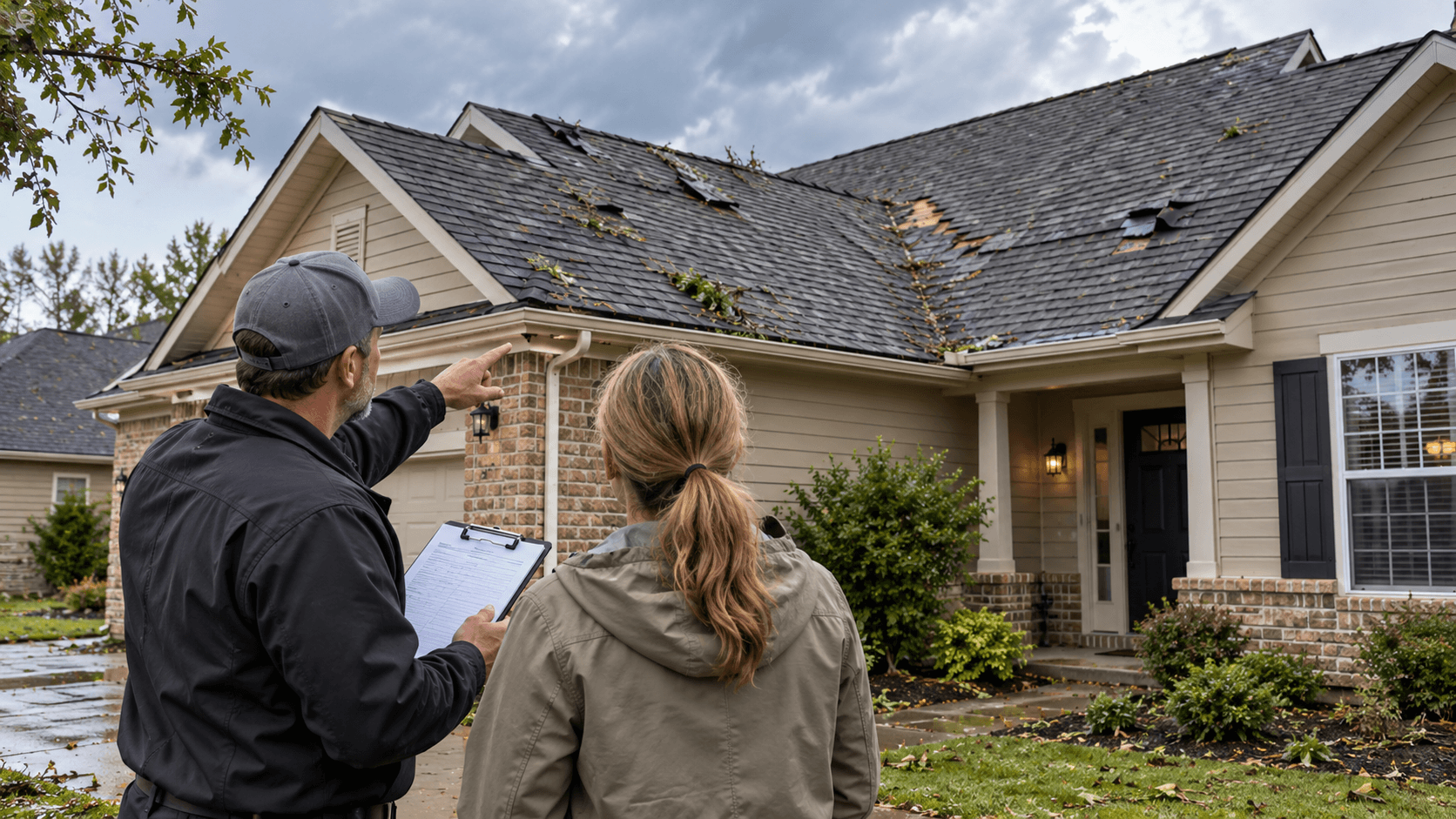
After a severe storm, finding missing shingles, damaged flashing, or signs of a roof leak can raise an important question: who pays for the repairs?
Many homeowners assume that if their roof is still under warranty, any damage should be covered. Others expect their homeowners insurance to handle the full cost. But a roof warranty vs homeowners insurance comparison reveals an important difference: these protections are designed to cover different types of problems.
A roofing warranty typically protects against certain product defects or installation issues, while homeowners insurance may cover sudden damage caused by events such as wind or hail. Neither automatically guarantees that every repair or replacement will be paid for.
Understanding where each type of protection applies can help you make better decisions after a storm and avoid unexpected expenses.
What Does a Roof Warranty Actually Cover?
A roof warranty is designed to provide protection against specific problems associated with roofing materials or installation. However, not all warranties offer the same coverage.
Most residential roofing warranties fall into two categories.
Manufacturer Warranties
Manufacturer warranties generally cover qualifying defects in roofing materials, such as shingles that fail to perform as expected because of a manufacturing problem.
Depending on the product and warranty terms, coverage may include replacement materials, labor, or other specified costs.
Some roofing products also include limited wind-resistance coverage, but that protection often depends on the shingle type, installation requirements, wind conditions, and warranty limitations.
A manufacturer warranty does not necessarily cover damage simply because it happened during a storm. Hail damage, falling branches, and other external events may fall outside standard material-defect coverage.
Workmanship Warranties
Workmanship warranties address problems related to how the roof was installed.
For example, if flashing was installed incorrectly or roofing materials were improperly secured, a workmanship warranty may cover the resulting installation issue, depending on its terms.
These warranties may be provided by the roofing contractor or included within certain enhanced manufacturer warranty programs.
Before assuming a problem is covered, check who issued the warranty, how long it lasts, and which conditions or exclusions apply.
What Does Homeowners Insurance Cover After a Storm?
Homeowners insurance serves a different purpose. Rather than protecting against defective roofing products or installation errors, it is generally intended to cover qualifying damage caused by sudden, unexpected events.
Depending on the policy, covered events may include:
- Windstorms that tear off or damage shingles
- Hail that damages roofing materials
- Falling trees or branches during severe weather
- Certain types of sudden water damage resulting from a covered event
However, coverage is not automatic. Policies have exclusions, limits, deductibles, and specific conditions for filing a claim. Some also include separate provisions for wind or hail damage.
Ordinary roof aging, gradual deterioration, and damage caused by neglected maintenance are generally not covered.
The distinction matters because two roofs with similar visible damage may receive very different insurance decisions depending on what caused the problem and the terms of the policy.
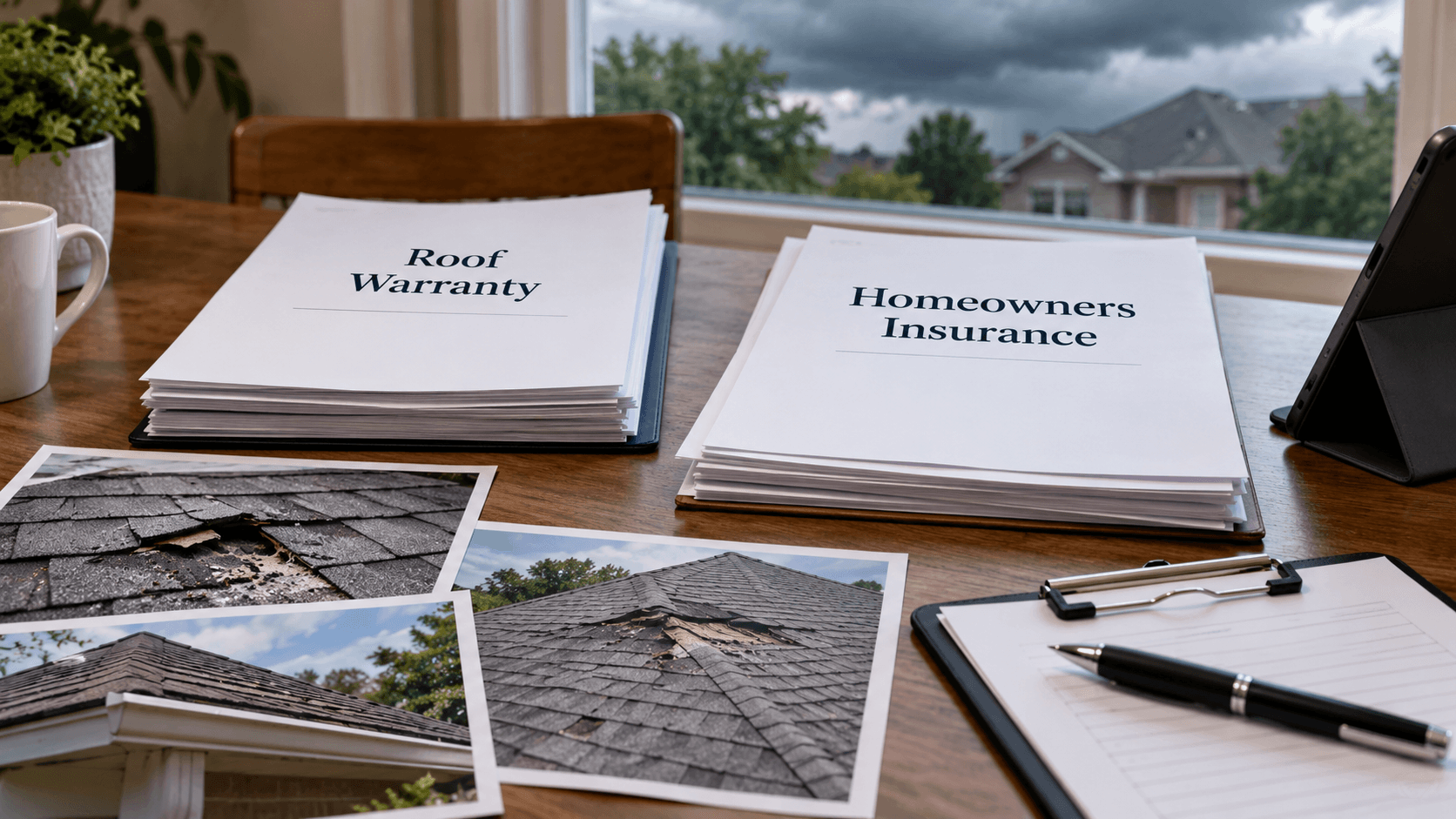
Roof Warranty vs. Homeowners Insurance: 5 Important Differences
1. The Cause of Damage Determines Which Coverage May Apply
The first question is not necessarily how much damage occurred, but why it happened.
If shingles are deteriorating prematurely because of a confirmed manufacturing defect, a manufacturer warranty may apply.
If strong winds lift or remove otherwise functional shingles, homeowners insurance may be the more relevant protection.
If the damage resulted from improper installation, a workmanship warranty may be worth reviewing.
Identifying the cause is an important reason to schedule a professional roof inspection before assuming which coverage applies.
2. Storm Damage Is Not Automatically Warranty Damage
A roof can still be under warranty and suffer damage that the warranty does not cover.
For instance, a manufacturer may offer a limited warranty against material defects while excluding damage from hail or wind events beyond specified conditions.
Some roofing warranties include separate wind coverage with specific requirements and limitations. That is why homeowners should review the actual warranty documents rather than relying only on the advertised number of warranty years.
A 30-year warranty does not mean every type of roof damage is covered for 30 years.
3. Homeowners Insurance Usually Includes a Deductible
Even when storm damage qualifies for insurance coverage, homeowners may still have out-of-pocket expenses.
The deductible is the portion of a covered loss the homeowner is responsible for paying.
Some policies use a fixed-dollar deductible, while others have separate wind or hail deductibles calculated as a percentage of the insured value of the home.
Your policy may also determine how much the insurer contributes based on whether the roof has actual cash value (ACV) or replacement cost value (RCV) coverage.
With ACV coverage, depreciation may reduce the amount paid. RCV coverage generally calculates the cost of repairing or replacing covered damage without deducting depreciation, subject to the policy’s terms and payment conditions.
Knowing these details before filing a claim can help you understand your potential financial responsibility.
4. Roof Age Can Affect Your Options
An older roof may still have warranty coverage for certain defects, but age and condition can influence how an insurance claim is evaluated. Some insurance policies provide different roof coverage based on age, material, or condition.
Insurers may also distinguish sudden storm damage from deterioration that developed over time.
For example, shingles that have become brittle through years of exposure may require a different assessment than newer shingles damaged during a single windstorm.
A professional inspection can help document the roof’s condition and identify visible evidence of storm-related damage.
5. The Claims Processes Are Different
A warranty claim usually starts with the manufacturer or contractor responsible for the applicable warranty.
You may need proof of purchase, installation records, product information, photographs, or an inspection to determine whether the problem qualifies.
An insurance claim goes through your homeowners insurance carrier, which reviews the reported loss, applicable coverage, and supporting documentation.
An insurance adjuster may inspect the property and prepare an estimate for covered repairs.
In either situation, a detailed roofing inspection can help establish the condition of the roof and provide useful documentation. However, the manufacturer, warranty provider, or insurance carrier makes the applicable coverage decision.
What If You Have Both a Roof Warranty and Homeowners Insurance?
Having both protections is common, particularly for homeowners who recently installed a roof.
The important thing to understand is that the two are not interchangeable.
Imagine a storm damages several sections of a relatively new roof. Even though the shingles are covered by a manufacturer warranty, that warranty may not apply if the damage was caused by hail. The homeowner would instead need to review their insurance policy to determine whether hail damage is covered.
Now consider a different situation: shingles begin failing prematurely without a significant weather event. If an inspection identifies a potential material defect, reviewing the manufacturer warranty may be the more appropriate starting point.
When the cause is unclear, documentation becomes especially important.
Avoid assuming either provider will pay until the damage has been assessed and the relevant coverage terms have been reviewed.
What Should You Do After Discovering Storm Damage?
If you notice signs of roof damage after severe weather, the following steps can help you make an informed decision.
Document what you can safely see. Take photographs from the ground, record the date of the storm, and note any water stains or other visible damage inside your home. Avoid climbing onto the roof.
Schedule a professional roof inspection. A qualified roofing contractor can assess visible damage, identify areas that may require further evaluation, and provide documentation of the roof’s condition.
Review your warranty and insurance documents. Check coverage terms, exclusions, deductibles, reporting deadlines, and any requirements for inspections or repairs.
Contact the appropriate provider. Your insurance carrier can explain how to report potentially covered storm damage. If a manufacturing or installation issue is suspected, contact the relevant warranty provider.
Keep your records organized. Save photographs, inspection reports, correspondence, estimates, and any claim-related documents.
Taking these steps can help clarify your options before repair work begins.
Get the Right Answers Before Making Roof Repairs
When a storm damages your roof, understanding the difference between a roofing warranty and homeowners insurance can help you avoid confusion and unexpected costs.
But determining what caused the damage is just as important as understanding the coverage.
Guardian Roofing & Siding offers free, no-obligation storm damage inspections for homeowners throughout Pennsylvania, New Jersey, Delaware, Maryland, Virginia, New York, and Connecticut.
Our team can inspect your roof, document the damage, explain available repair options, and work with your insurance adjuster throughout the restoration process.
Schedule your free storm damage inspection and get a clearer picture of your roof’s condition before making your next decision.