
Ice Dam or Roof Leak? How to Tell the Difference Before Winter
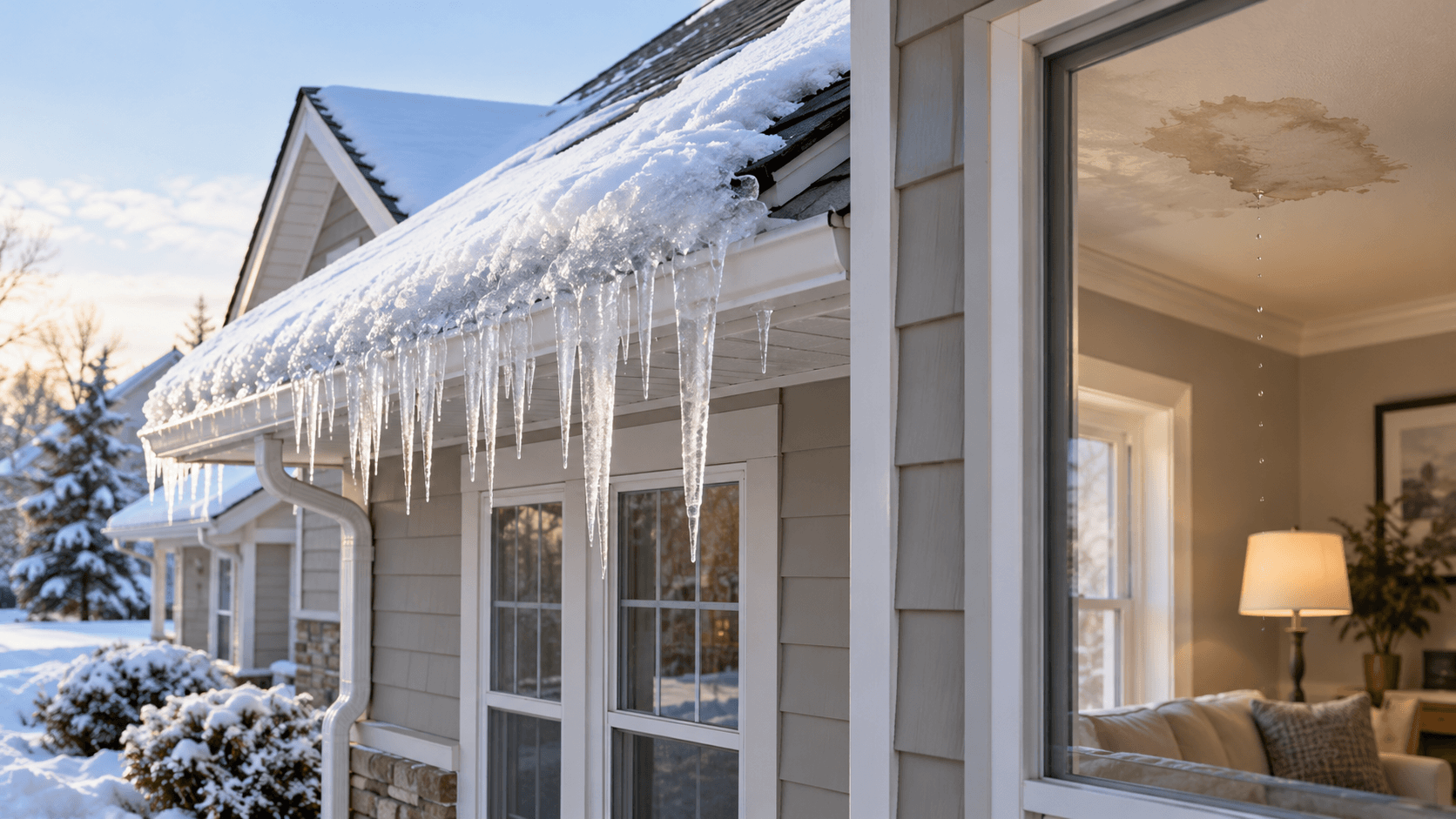
Water stains on the ceiling during winter can make any homeowner assume the roof is leaking. But when temperatures drop and snow begins to accumulate, the source of that water may not be a traditional roof leak at all.
It could be an ice dam.
Understanding the difference between an ice dam vs roof leak matters because the two problems can look similar inside your home but may require very different solutions. A damaged shingle, flashing issue, or roof penetration can allow water inside during rain or snow. An ice dam, on the other hand, forms because of temperature differences across the roof and can force melting snow back underneath roofing materials.
Here’s how to recognize the signs and know when it’s time to have your roof inspected.
What Is an Ice Dam?
An ice dam is a ridge of ice that forms near the edge of a roof, typically after snow has accumulated.
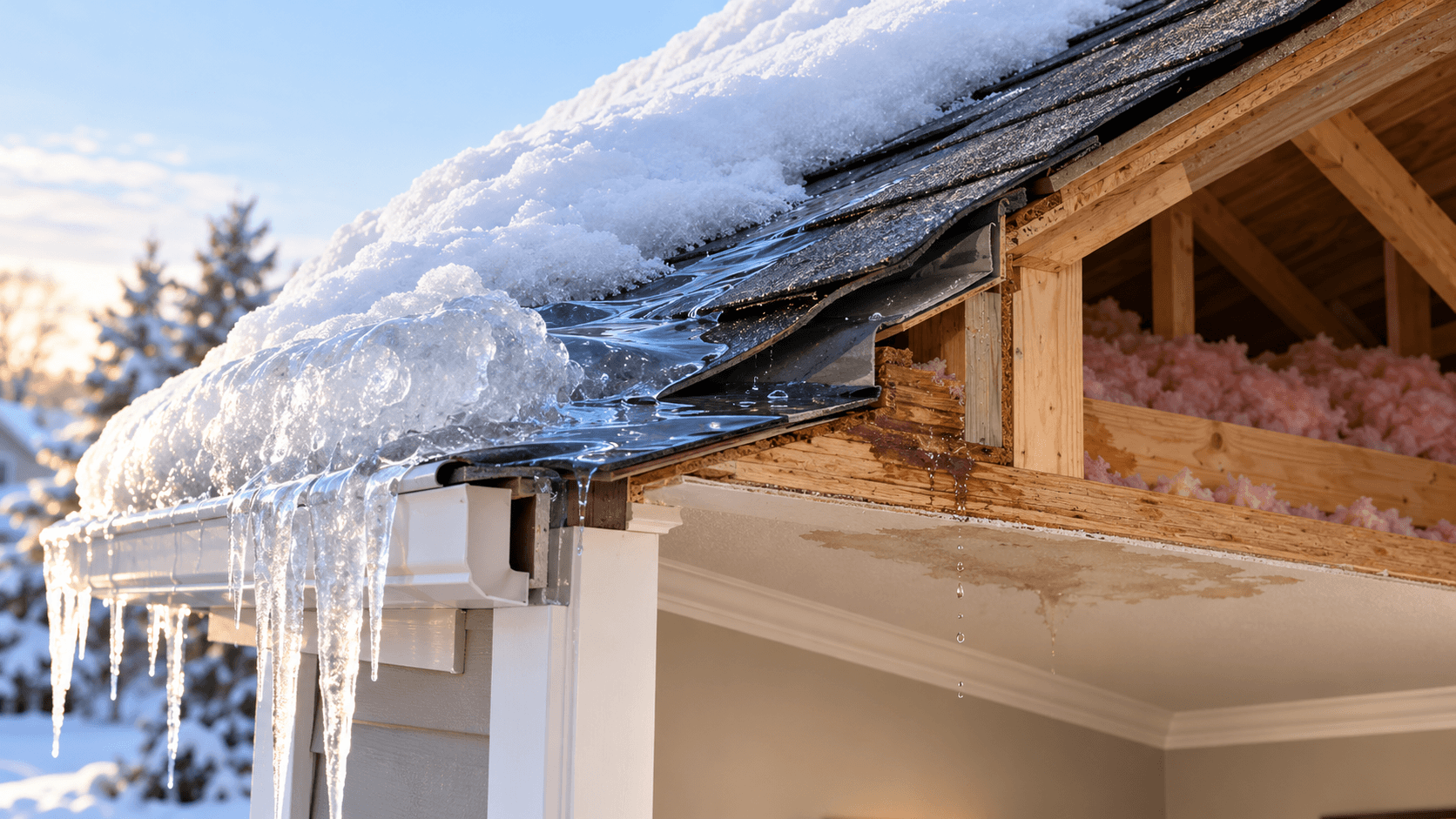
Heat escaping from the home can warm the upper portion of the roof enough to melt the snow sitting on it. That water then flows toward the colder roof edge or eaves, where it freezes again.
As the process continues, the ice buildup can prevent additional melting snow from draining normally. Water begins collecting behind the ice and may eventually work its way underneath shingles and other roofing materials.
Once that happens, homeowners may notice water stains, moisture in the attic, or even an active leak inside the home.
Icicles hanging along the roofline can sometimes accompany ice dam conditions, but they don’t automatically mean an ice dam is causing damage.
What Causes a Traditional Roof Leak?
A traditional roof leak happens when there is an opening or failure somewhere in the roofing system that allows water to enter the home.
Possible causes include:
- Missing, cracked, or damaged shingles
- Damaged or deteriorated flashing
- Problems around vents, chimneys, or other roof penetrations
- Storm damage from wind, hail, or falling debris
- Aging roofing materials
- Damaged underlayment or roof decking
Unlike an ice dam, which is closely connected to winter temperatures and snowmelt, a conventional roof leak can appear at almost any time of year.
The challenge is that once water enters the roofing system, it can travel along decking, rafters, or insulation before becoming visible inside the house. That means the stain on your ceiling may not be directly below the actual source of the problem.
Ice Dam vs Roof Leak: 5 Clues That Can Help You Tell the Difference
You don’t need to diagnose the roof yourself, and climbing onto a snowy or icy roof is never a good idea. However, there are a few clues you can safely look for from inside the home or from ground level.
1. Pay Attention to When the Leak Appears
Timing can tell you a lot. If moisture appears primarily after snow has accumulated and temperatures repeatedly move above and below freezing, an ice dam may be involved.
If you notice water during ordinary rainstorms, regardless of whether there is snow or ice on the roof, damaged roofing materials or flashing may be a more likely cause.
That isn’t a definitive diagnosis, but it gives a roofing professional an important clue about where to begin the inspection.
2. Look at Where the Water Is Showing Up
Ice-dam-related leaks often appear near exterior walls because the ice typically forms around the colder edges of the roof.
You might notice:
- Water stains near the top of an exterior wall
- Damp insulation near the attic eaves
- Peeling paint near exterior walls
- Moisture around the roof edge or soffit area
A traditional roof leak can appear almost anywhere depending on where water entered and how far it traveled through the structure.
3. Check the Roof Edge From the Ground
A heavy buildup of ice along the eaves may point toward an ice dam, particularly when there is still snow higher up on the roof. You may also see large icicles or sections where snow appears to have melted unevenly.
However, don’t try to break the ice away or climb onto the roof. Ice, snow, and wet roofing materials create a serious fall hazard, and removing ice incorrectly can damage shingles, gutters, or other parts of the roof.
4. Consider Whether the Problem Happens Repeatedly
If the same issue appears every winter during periods of heavy snow and freezing temperatures, the problem may involve more than the roof covering itself.
Recurring ice dams can be associated with heat escaping into the attic, inadequate insulation, air leaks, or ventilation conditions that allow portions of the roof deck to warm unevenly.
In those situations, repairing water damage without addressing why the ice keeps forming may only solve part of the problem.
5. Think About Recent Storm Damage
Winter doesn’t eliminate the possibility of ordinary storm damage. Strong winds can loosen or remove shingles, branches can damage the roof, and flashing can become compromised during severe weather.
If you notice a leak following a windstorm or another significant weather event, even when snow is present, a professional inspection can help determine whether the moisture is coming from an ice dam, storm damage, or a combination of issues.
Why Ice Dams Can Become a Bigger Problem
An ice dam doesn’t have to create a dramatic indoor leak to cause damage.
When water backs up beneath shingles, it can reach the underlayment, roof decking, insulation, walls, or ceilings. Over time, persistent moisture can contribute to damaged building materials and mold growth.
The weight of accumulated snow and ice can also put additional stress on roof edges and gutters.
That is why early inspection matters. The visible water stain inside your home may only be one part of what is happening within the roof system.
Can You Prevent Ice Dams?
The best long-term approach is usually to reduce the conditions that allow snow to melt unevenly across the roof.
Depending on the home, that can involve improving attic air sealing, insulation, ventilation, or portions of the roofing system designed to protect vulnerable areas near the eaves.
Snow and ice conditions vary from one home to another, so the right solution depends on what is actually causing the roof surface to warm.
If ice dams are a recurring problem, having the attic and roofing system evaluated before winter can help identify areas that may need attention.
What Should You Do If You Notice Water This Winter?
Start by documenting what you see. Take photographs of interior stains, visible roof conditions from the ground, ice buildup, and any other signs of damage. Note when the moisture appeared and what the weather was like before you noticed it.
Avoid climbing onto the roof or attempting to remove an ice dam yourself.
Then schedule a professional roof inspection. A roofing professional can evaluate the condition of the shingles, flashing, roof edges, attic, and other areas that may help identify where the water is coming from.
If the problem followed a storm and you believe your homeowners insurance may be involved, keep your documentation and review your policy with your insurance carrier. Coverage will depend on your individual policy and the cause of the damage.
Don’t Guess Where the Water Is Coming From
An ice dam and a roof leak can leave behind many of the same warning signs, but fixing the visible stain won’t necessarily fix the source.
If you notice water inside your home this winter, or you want to know whether your roof is ready for colder weather, Guardian Roofing & Siding can help identify what is happening before the problem becomes more extensive.
Guardian offers free, no-obligation roof and storm damage inspections for homeowners throughout Pennsylvania, New Jersey, Delaware, Maryland, Virginia, New York, and Connecticut.
Our team can inspect the roof, document what we find, and explain the repair options available based on the condition of your home.